|
|


 Your basket is empty
 |
|||
 |
|||
 |
|||
Emu Oil Research: Fatty Acid Analysis of Emu Oil
Amanda Brown M.S.
Paul C. Smith, D.V.M., Ph.D. Auburn University
Emu oil has recently received attention for its possible therapeutic and cosmetic benefits. The oil of the emu has been used for medicinal purposes by the Aborigines of Australia for many years and is currently being used in the cosmetic industry for its protective and softening effects of the skin. The exact mechanism by which emu oil exerts these effects is not known. Because several fatty acids are known to have potent physiological effect, it is important to characterize emu oil with respect to its fatty acid composition.
Fatty acids are classified according to chain length and by the number of double bonds, or points of unsaturation, in the chain. For example, palmitic acid is a fatty acid with sixteen carbons and no double bonds; thus in scientific nomenclature it is abbreviated as "16.0". Because this fatty acid contains no double bonds, it is termed a "saturated" fatty acid. Fatty acids with one double bond (one point of unsaturation) are called "monounsaturated" fatty acids, and those with two or more double bonds are called "polyunsaturated" fatty acids. Oleic acid or 18:1 is a common monounsaturated fatty acid, and linoleic acid or 18:2 is a common polyunsaturated fatty acid. Any natural fat contains a mixture of all three types of fatty acids attached to a glycerol "backbone". These compounds are called triglycerides. If a fat contains triglycerides made up of mostly saturated fatty acids, such as palmitic acid, then this fat is called a saturated fat.
The health effects of different types of fatty acids are well established. For example, saturated fat in the diet is known to raise blood cholesterol, but monounsaturated fats and polyunsaturated fats are known to lower blood cholesterol levels and thus reduce one's risk for cardiovascular disease. Some polyunsaturated fatty acids are called "essential fatty acids" because they are necessary for the proper functioning of the body yet cannot be made by the body. Humans must get these fatty acids from dietary sources. Linoleic acid (18:2), an essential fatty acid for humans, is converted to arachidonic acid (20:4) which serves as a precursor for the powerful hormone-like compounds called "eicosanoids". Eicosanoids serve normal functions in the body; however, they are produced in excessive amounts in some disease states such as arthritis. Concentrations of eicosanoids in the body can be manipulated by drugs (such as aspirin), by the type of fat in the diet, and in some cases, by fat administered in a topical manner.
Because there are no published scientific studies which have reported the fatty acid composition of emu oil, a study was undertaken at Auburn University to characterize the fatty acid composition of emu oil. The results from this investigation help to explain the properties and possible benefits of emu oil.
Ten samples of emu fat/oil were analyzed by gas chromatography. Two of these were rendered samples. All but one sample was taken from the fat depot on the back of the animal; the single sample was taken from the abdomen. All samples were obtained from animals in the Southeastern United States.
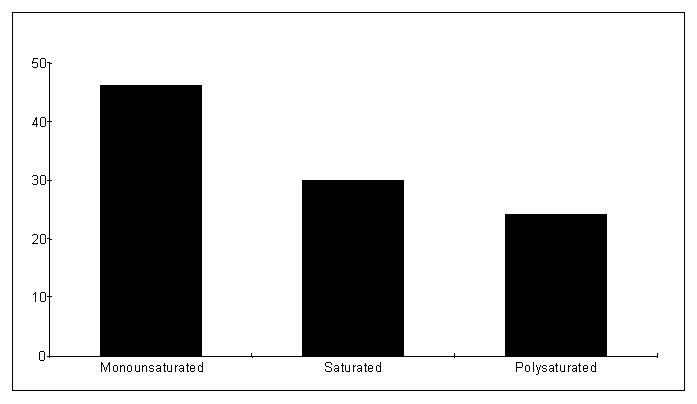
Results indicated that emu oil is highest in monounsaturated fatty acids, with lower amounts of saturated and polyunsaturated fatty acids (Figure 1). Oleic acid (18:1) was found to be the major monounsaturated fatty acid in emu oil, comprising over 40% of the total fatty acids (Figure 2). Much smaller amounts (less than 5%) of the palmitoleic acid (16:1) were found.
Major saturated fatty acids in emu oil were palmitic acid (16:0) which comprised approximately 20% of total fatty acids and stearic acid (18:0) at 8%. Linoleic acid (18:2) at 20% of the total was the primary polyunsaturated fatty acid observed.
In conclusion, approximately 70% of the fatty acids in emu fat are unsaturated. This composition is consistent with current recommendations for a "heart healthy" diet. The monounsaturated fatty acid, oleic acid, is the major fatty acid in emu oil. This fatty acid is a known enhancer for transport of bioactive compounds into the skin, and thus, the fatty acid compositions consistent with emu oil being very penetrating. This aspect of the oil is being investigated in a second phase of the project.
Editors Note: Emu oil research dates back to 1987. However, most studies have been proprietary. No emu oil analysis has been reported in medical of scientific journals as of this date.
The AEA Research Committee sponsored this for public analysis. The results will be published in Highlight of Agricultural Research, an Auburn University publication, as well as scientific journals.
*Highest in monounsaturated fatty acids*Lower in saturated & polysaturated fatty acids
Fatty Acid Content of Emu Oil